![How to Properly File a Quitclaim Deed in [market]](https://image-cdn.carrot.com/eyJidWNrZXQiOiJwcm9kdWN0aW9uLmNhcnJvdC11cGxvYWRzLm9uY2Fycm90LmNvbSIsImtleSI6InVwbG9hZHMvc2l0ZXMvNzgzNTAvMjAyNi8wNy9Ib3ctdG8tUHJvcGVybHktRmlsZS1hLVF1aXRjbGFpbS1EZWVkLnBuZyIsImVkaXRzIjp7InJlc2l6ZSI6eyJ3aWR0aCI6MTE1Mn0sInRvRm9ybWF0Ijoid2VicCIsIndlYnAiOnsicXVhbGl0eSI6NzB9fX0=)


Getting the deed wrong doesn’t just slow down your closing; it can cost you real time and money before you ever get to the closing table. It can unravel the entire transfer, leave you exposed to old liens, and send you back to square one months later. I’ve seen it happen with families who thought they’d handled everything correctly, only to find out the county clerk rejected the document because the legal description didn’t match the recorded plat. A few hours of upfront care would have saved them serious grief. Understanding the filing process from start to finish can help you avoid these costly mistakes and record your quitclaim deed correctly the first time.
Why Does a Deed Matter for Texas Property Ownership?
Owning real property in Texas means more than holding a key. It starts with having the right ownership documents in place. Your name on the deed is what gives you the legal right to sell, mortgage, or pass that property along. Without a properly recorded deed in the public record, you’re just someone living in a house (and the county doesn’t know you exist).
Recording a deed with the county clerk where the property sits gives public notice of the transfer. It protects you from competing claims, keeps your mortgage lender confident in their collateral, and reassures future buyers that the title is clear. Skip that step, and the transfer might be valid between you and the other party, but the rest of the world, including creditors and future buyers, doesn’t have to honor it.
Are you sure the deed to your property accurately reflects who should own it right now? A lot of people are surprised to find that their records still show a deceased parent, an ex-spouse, or a co-owner who paid nothing on the mortgage for years (sometimes decades). Checking now can prevent costly problems later.
If you’re ready to sell rather than face deed issues or ownership complications, contact us today for a fair, no-obligation cash offer and see how simple it can be to sell your Texas property.
What Is a Quitclaim Deed in Texas?
A quitclaim deed is often treated like a universal fix. People reach for it expecting it to transfer ownership as cleanly as a traditional real estate sale. The problem is that a quitclaim deed makes no promise that the signer actually owns the property. It transfers only whatever interest the grantor has, if any, and that interest could be nothing at all.
In Texas, a quitclaim deed releases to the grantee whatever right, title, and interest the grantor holds in the property without providing any warranty of title. If the grantor has no legal ownership interest, the grantee receives none. Because of that limited protection, quitclaim deeds are typically used for transfers between parties who already trust each other, such as divorcing spouses, family members, co-heirs dividing inherited property, or someone removing a potential claim from the title.
Problems arise when people try to use a quitclaim deed for a standard home sale between unrelated buyers and sellers. Texas courts have historically viewed quitclaim deeds with skepticism, and many title insurance companies are reluctant to insure properties with a quitclaim in the chain of title. That can delay or even derail a future sale, making warranty deeds the better choice for most traditional real estate transactions.
What Is the Difference Between a Warranty Deed and a Quitclaim Deed in Texas?

What separates a warranty deed from a quitclaim deed is the promise behind the transfer. Warranty deeds, whether general or special, are the standard way to transfer real property in Texas because they include legal guarantees about the property’s title.
A general warranty deed protects the buyer against title defects throughout the property’s entire ownership history. A special warranty deed offers more limited protection, covering only issues that arose while the current owner held title.
A quitclaim deed conveys interests in a very different way. With a quitclaim deed, the grantor gives the recipient whatever ownership interest the grantor has at the time of executing the quitclaim deed. A quitclaim deed might convey a full, partial, or no interest. Because it provides no warranties regarding title, the recipient has no legal recourse should title issues arise later.
For family transfers, clearing an old ownership claim, or removing a former spouse’s name after a divorce, a quitclaim deed is often an appropriate choice. When buying or selling property for value, however, a warranty deed is the safer option because it provides legal protections that are typically supported by title insurance. If you’re looking to sell your home fast in Dallas and other Texas cities, understanding which deed fits your situation can help prevent delays and keep your transaction on track.
Title vs Deed in Texas: What Is the Difference?
A seller came to me last winter with a problem she didn’t know she had. She believed she owned the home outright, but the recorded deed still listed her late husband alongside her. That small detail turned into a major obstacle when she needed to move quickly, because title companies won’t close a transaction until the ownership records match the legal paperwork. If you’re preparing to sell your property, knowing how to choose a title company can also help you avoid unnecessary delays and make sure the title and closing process are handled properly.
A deed is the physical document that transfers an ownership interest in real estate from one person to another. Title, by contrast, is the legal concept of ownership itself. It represents the bundle of rights that comes with owning property, including the right to use, occupy, sell, or transfer it to another person.
Although people often use the two terms interchangeably, they are not synonymous. A deed shows that an ownership transfer has occurred. The title refers to ownership after the transfer that the deed shows has occurred. A recorded chain of title that legally links ownership to you can allow you to hold a valid title, even if the last deed that was signed and recorded does not show your name.
The problem arises when that chain contains gaps, errors, or outdated information. That was exactly what happened in her case. We eventually corrected the records with the proper legal documents, but it was a reminder that paperwork matters. A looming foreclosure sale or closing deadline will not pause while ownership issues are untangled, and those delays can cost homeowners valuable options.
Who Are the Grantor and Grantee on a Texas Deed?

The grantor is the person giving away their ownership interest, and the grantee is the person receiving it. That sounds straightforward until someone uses a nickname, leaves out a middle initial that appears in the existing title records, or misspells a name that has been on file for decades. Even small discrepancies can create confusion later when the property is sold or refinanced. If you need to resolve ownership issues before selling, investor house buyers in Texas may still be interested in purchasing the property while helping you understand your available options.
A valid quitclaim deed must be in writing, clearly identify both the grantor and grantee, include the property’s full legal description, state the consideration, be signed by the grantor, and be delivered to and accepted by the grantee. Every detail should match the existing property records as closely as possible to avoid unnecessary title questions.
Texas also requires the grantee’s mailing address on the deed or on a separately attached document, and the omission can result in a violation of the state property code. If the property is a homestead and the grantor is married, the grantee’s spouse may be required to sign the deed under Texas Family Code Section 5.001, even if the property is separate property, not community property. Spending a few extra minutes verifying these elements before signing the deed can help avoid recording delays and ownership disputes.
What Are the Formatting Requirements for a Texas Quitclaim Deed?
A seller in Conroe handed me a quitclaim deed that had been rejected twice by the Montgomery County Clerk’s office. The font was too small, and the top of the first page was packed with text, leaving it unclear where the clerk’s recording stamp should go. Tiny formatting mistakes can delay the recording process and force you to start over.
Texas counties generally require deed documents to be printed on 8.5-by-11-inch white paper, with the top inch of the first page left blank for the clerk’s recording stamp and body text in at least 10-point font so the document can be scanned properly. The notice of confidentiality rights required by Texas Property Code Section 11.008 must also appear at the top of the first page in 12-point boldfaced capital letters. Overlooking any of these formatting rules can result in the clerk rejecting the document.
The legal property description must match the county’s existing records exactly. Even a minor difference, such as a missing lot number or an incorrect subdivision name, can create title problems or cause the deed to be rejected. Before filing, obtain a copy of the current recorded deed from the county’s records and copy the legal description word-for-word to avoid unnecessary delays.
How to File a Quitclaim Deed in Texas
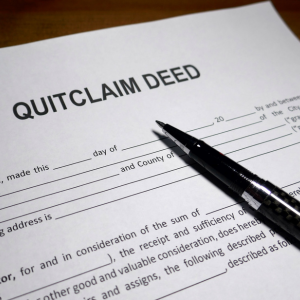
Real estate transfers in Texas are recorded with the county clerk in the county where the property is located. Bring the original executed deed with original signatures, not a photocopy. The grantor’s signature must be acknowledged before a notary public holding a valid Texas commission; if the commission has expired or was issued in another state, the county may reject the deed outright (and I’ve seen this happen at closing).
Texas does not charge transfer or gift taxes on quitclaim deeds. Harris County’s current recording fee runs $25 for the first page, plus $4 per additional page. Other counties vary, so call ahead. After recording, the clerk updates the public records and returns a stamped copy to the address listed in the deed. Make sure that the address is current before you file.
Carlos Robinson called me about a rental house in Katy he’d been trying to unload for two years, two tenants and a co-owner whose name was still on the deed from a business transaction that had soured. We worked through the deed transfer with his co-owner, got it recorded at the Fort Bend County Clerk’s office, and Carlos walked away without ever touching a listing agreement (co-owner situations slow everything down). If you’re dealing with something similar, you can sell your home fast in Katy without waiting on a listing.
If you’re in a similar position, Home Buying Hounds works with property owners across Texas who need a straightforward path out, no listing, no repairs, no months of uncertainty.
Filing a quitclaim deed in Texas is more than completing a form. It is about making sure the transfer is legally valid and properly recorded. Taking the time to verify the ownership details, follow county formatting requirements, and record the deed correctly can help you avoid title disputes and delays down the road. If your situation involves liens, multiple owners, or other legal complications, getting professional guidance before you file can save you time, money, and unnecessary stress.
Frequently Asked Questions
Can I File a Quitclaim Deed Without an Attorney in Texas?
You can legally draft and file a quitclaim deed yourself, though having an attorney review it ensures you meet all local requirements and don’t inadvertently trigger tax or ownership issues. For simple family transfers where the title is clean and both parties agree, many people handle it without legal help. For anything involving a lien, an estate, a divorce decree, or a mortgage, paying for a real estate attorney’s review is money well spent.
What Are the Requirements for a Quitclaim Deed in Texas?
The deed must be in writing, include the full legal names of both grantor and grantee, provide the complete legal property description, state the consideration, be signed by the grantor before a Texas-commissioned notary, and include mailing addresses for both parties. Recording the deed with the county clerk gives public notice of the transfer and protects against future competing claims. Different counties can have additional formatting rules, so always check with your specific county clerk before you show up.
What Are the Risks of a Quitclaim Deed?
A Texas quitclaim deed offers little protection to the grantee, who takes the property as-is with no warranty of title against liens or other encumbrances. If the grantor had no actual ownership interest, nothing transfers. The deed also does not remove other people’s liens or encumbrances unless explicitly addressed elsewhere. Buyers who accept a quitclaim deed from a stranger assume significant risk and are unlikely to be able to obtain title insurance.
Do You Need a Lawyer to Transfer a Deed in Texas?
Texas law doesn’t require an attorney to file a quitclaim deed, but complex situations often benefit from legal guidance. Simple transfers between family members with clear ownership are usually handled without one. However, if the property involves a mortgage, liens, community property, divorce, estate planning, or an uncooperative co-owner, consulting a real estate attorney can help prevent costly mistakes.
If you’ve got a property situation that feels complicated, whether it’s a deed that needs to be corrected, a co-owner’s name that needs to come off, or you simply want to move on from a house without the traditional listing process, reach out to us at (833) 997-7653 . Home Buying Hounds can help you explore practical solutions based on your situation. No pressure, no obligation. Just a straightforward conversation about what your options actually look like.
Helpful Texas Blog Articles
- Selling Your House At Auction In Texas
- Selling Your House to a Relocation Company in Texas
- Selling Your Texas Home With An Outstanding Mortgage
- Selling A Hoarder House In Texas
- How To Sell Your House By Owner In Texas
- Can You Sell a House in Foreclosure in Texas
- How to Sell a Fixer-Upper House in Texas
- Tax Implications of Selling a House Below Market Value in Texas
- Can a Jointly Owned Property Be Sold by One Owner in Texas
- How to File a Quitclaim Deed in Texas
- Can I Sell My House and Still Live in It
- Best Time to Sell A House in Texas
- Can Medical Bills Take Your House in Texas
- How to Choose a Title Company in Texas